The Best Kinds of Theatre Games (and Why I Love Them So Much)
Updated: Mar 20
If you’ve spent more than five minutes in one of my theatre classes, you know one thing for sure: we play a lot of games.
And no—it’s not because I ran out of lesson ideas.
It’s because theatre games are one of the most powerful tools we have as educators and directors. They build confidence. They encourage creativity. They teach teamwork. They help students take risks, make bold choices, and discover what their bodies and voices can do.

Over the years, I’ve developed a few strong beliefs when it comes to theatre games:
Any game can work for any age—you just might need to adapt it a little. Preschoolers, teens, adults… the magic is in how you frame it, the pace you set, and what you’re focusing on that day. For younger performers, you may need to break down the instruction or simplify, but the base of the game normally stays the same.
For the older performers, it's all about how you explain and position the game. If performers believe they are in a safe space and will not be judged, then even a game like duck, duck, goose can become a theatre game.
Not all theatre games serve the same purpose. That’s why I like to think of them in three big categories: Warm-Ups, Explore Games, and Audience Games. Each one plays a different role in your class, and when you mix them together? That’s where the real magic happens.
Warm-Up Games: Setting the Tone
Warm-up games are usually how I start a class—and for good reason. These games help performers feel comfortable in the room, connected to each other, and ready to jump in. They set the tone for everything that follows. Sometimes we need focus. Sometimes we need big energy. Sometimes we need creativity turned all the way up.
Warm-ups can:
Get bodies moving
Wake up voices and brains
Build trust in the group
Create ensemble vibes
Shake off nerves after a long day
Create focus or build energy
And most importantly? They’re FUN.
When students are laughing together in the first ten minutes of class, walls come down. Suddenly that scary idea of “performing” doesn’t feel so scary anymore. It just feels like play.
One of my favourite warm-up games is the theatre wave. Have one performer start a sound and action, and every performer takes turns copying the sound and action.
It moves around the circle like a wave. Once it gets all the way around the circle, the next performer creates a new sound and action, and it goes around. Everyone takes a turn. Keep the pace quick and fun!

Explore Games: Learning Without Even Noticing
These might be my very favourite. Explore games are the ones where performers are developing skills and characters… without realizing that’s what they’re doing. The focus here isn’t “do it right.” The focus is play.
Through these games, students might be:
Building characters
Practicing emotions
Learning how to make strong physical choices
Using their imagination
Responding to others in the moment
Discovering how status, relationships, or setting affect a scene
They think they’re just being silly. You and I know better.
These are the games where creativity explodes. Where students surprise themselves. Where they try something new because the pressure is low and the curiosity is high. It’s joyful, messy, imaginative work—and it’s doing so much behind the scenes.
One of my favourite explore games is acting like different objects. It's simple and easy. Have performers walk around the room and call out different objects, then clap your hands or yell back to neutral in between.
Examples of objects to get started:
Bouncing ball
Tower of blocks falling down or being built
Tree in the wind
Train chugging down a track
Skis going down a hill
There are so many options! Have performers share their ideas as well.
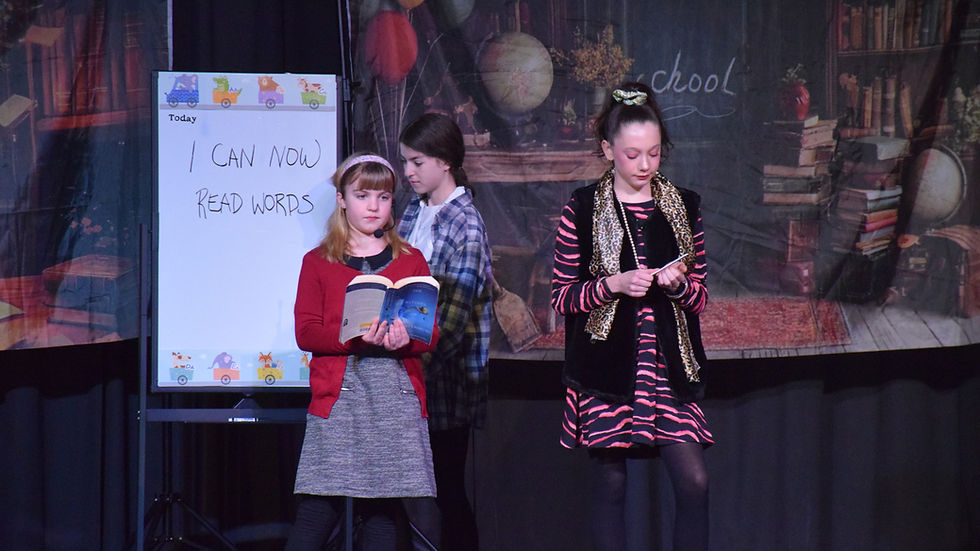
Audience Games: Practicing Performing (and Watching!)
Then there are Audience Games—and these are so important. These games give performers a chance to step in front of others in a way that feels safe, supportive, and low-pressure. Sometimes they’re improv-style games where students have to think on the spot. Other times they involve stepping away to practice for a few minutes, then coming back to share something prepared.
Audience games help students learn:
How to be brave in front of people
How to make choices and commit to them
How to listen and react
How to take direction
What it means to be a respectful, encouraging audience
Because let’s not forget—being a great audience member is a theatre skill too. Cheering for your peers. Watching closely. Staying focused. Celebrating effort. Creating a space where everyone feels safe to try. That’s ensemble building at its finest.
One of my favourite audience games is enter the scene. One performer starts with an action. Another performer must decide who that character is to them, where they are, and what the problem is. They must say a line that shares all of that to the audience. The second performer replies with a line. It's simple, fun, and gets everyone thinking.
Why the Mix Matters
When you combine all three kinds of games in a class—warm-ups, explore games, and audience games—you create something really special. You start with connection. You play with imagination. You practice performing.
And before students even realize what’s happening, they’ve:
✔️ gained confidence
✔️ strengthened communication
✔️ taken creative risks
✔️ supported each other
✔️ fallen a little bit in love with theatre
Which… if you ask me… is kind of the whole point.
Whether you’re teaching tiny humans, teens, or grown-ups who secretly think they “aren’t theatre people,” games are the doorway in. They invite everyone to the stage.
And that’s why I’ll never stop playing them.
The Importance of Play in Theatre Education
Incorporating play into theatre education is essential. It allows students to explore their creativity in a safe environment. Through play, they can express themselves without fear of judgment. This freedom fosters a love for the art form.
Theatre games also promote collaboration. Students learn to work together, share ideas, and support one another. This teamwork is vital, not just in theatre, but in life.
Moreover, engaging in these activities helps develop critical thinking skills. Students must make quick decisions and adapt to new situations. This skill set is invaluable, extending beyond the classroom.
In conclusion, theatre games are not merely fun activities. They are powerful tools that enhance learning and personal growth. By embracing play, we cultivate a new generation of confident, creative individuals ready to take on the world.
So, let’s keep playing and exploring the magic of theatre together!


Comments